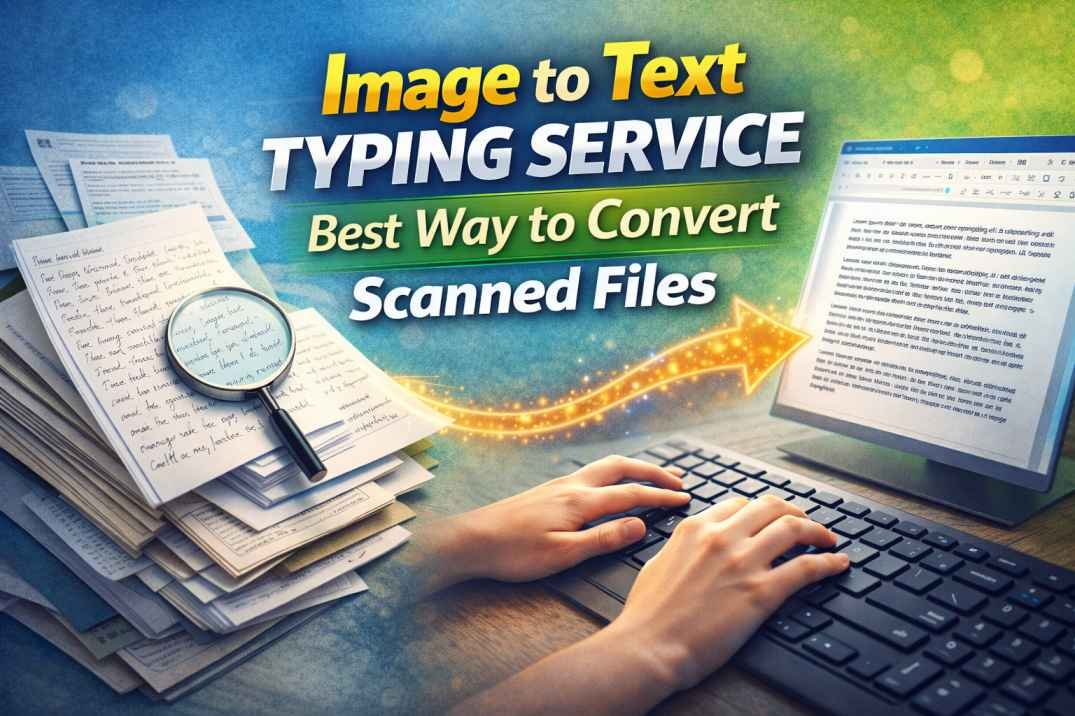
Image to Text Typing Service: Best Way to Convert Scanned Files
In today’s digital-first world, information needs to be easily accessible, editable, and shareable. However, a large amount of valuable data still exists in non-editable formats such as scanned documents, images, handwritten notes, and PDFs. This is where an image to text typing service becomes essential.
Whether you are a student, business owner, researcher, or professional, converting images into editable text can save time, improve efficiency, and enhance productivity. In this comprehensive guide, we will explore everything you need to know about image to text typing services, their benefits, process, use cases, and how to choose the best service provider.
What is an Image to Text Typing Service?
An image to text typing service is a process that converts content from images, scanned documents, or handwritten notes into editable digital text formats such as Word documents, PDFs, or plain text files.
This can be done through:
- Manual typing by professionals
- Optical Character Recognition (OCR) software
- A combination of both methods
The goal is to create accurate, clean, and well-formatted text that can be edited, searched, and shared easily.
Why Image to Text Conversion is Important
Many organizations and individuals deal with documents that are not digitally editable. These include old records, printed books, invoices, forms, and handwritten notes.
Converting these documents into text provides several advantages:
- Easy editing and updating
- Improved document organization
- Faster data retrieval through search
- Better storage and backup
- Enhanced collaboration and sharing
In short, digitizing content ensures long-term usability and accessibility.
Common Types of Files Converted
An image to text typing service can handle a wide variety of input formats:
- Scanned PDF documents
- JPEG, PNG, and TIFF images
- Handwritten notes
- Printed books and manuscripts
- Forms and invoices
- Historical or archival documents
This flexibility makes the service useful across different industries.
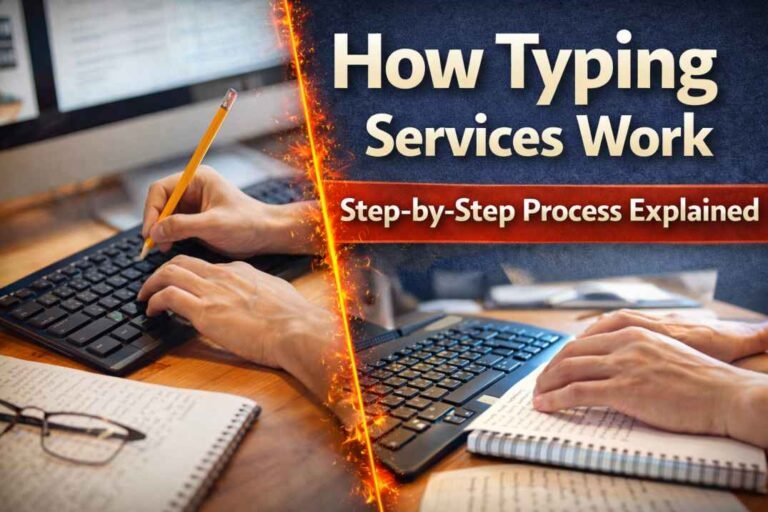
How Image to Text Typing Services Work
Understanding the process helps you choose the right service and set realistic expectations.
1. File Submission
The process begins with submitting the scanned files or images to the service provider. Files can be shared via email, cloud storage, or upload portals.
2. Image Analysis
The quality of the image is assessed. Factors such as resolution, clarity, and alignment play a crucial role in determining accuracy.
3. Conversion Method
Depending on the complexity, the provider may use:
- OCR tools for printed text
- Manual typing for handwritten or complex layouts
- Hybrid approach for better accuracy
4. Editing and Formatting
After conversion, the text is carefully formatted to match the original structure. This includes:
- Headings and paragraphs
- Tables and columns
- Fonts and alignment
5. Quality Check
A final proofreading step ensures accuracy, consistency, and error-free output.
6. Delivery
The completed file is delivered in the desired format, such as Word, Excel, or searchable PDF.
Benefits of Using Image to Text Typing Services
1. High Accuracy
Professional services ensure a high level of accuracy, especially when dealing with complex or handwritten documents.
2. Time-Saving
Manual typing of large volumes of data can be time-consuming. Outsourcing this task allows you to focus on more important work.
3. Cost-Effective
Hiring a service can often be more economical than dedicating in-house resources to the task.
4. Scalability
Whether you have a few pages or thousands of documents, typing services can handle projects of any size.
5. Data Security
Reputable providers follow strict confidentiality protocols to protect sensitive information.
OCR vs Manual Typing: Which is Better?
Both OCR and manual typing have their advantages.
OCR (Optical Character Recognition)
- Fast and automated
- Suitable for clear printed text
- Cost-effective for large volumes
Manual Typing
- Higher accuracy for complex or handwritten content
- Better for formatting and layout
- Ideal for poor-quality images
Most professional services combine both methods to achieve optimal results.
Who Needs Image to Text Typing Services?
The demand for image to text typing service spans multiple sectors:
Students and Academics
- Converting handwritten notes into digital format
- Digitizing research materials
Businesses
- Data entry from invoices and forms
- Record digitization
Legal Professionals
- Converting legal documents and case files
- Maintaining digital archives
Healthcare Sector
- Digitizing patient records
- Converting handwritten prescriptions
Publishers and Authors
- Converting manuscripts into editable formats
- Preparing content for publication
Key Features to Look for in a Service Provider
Choosing the right provider is crucial for quality results.
Consider the following factors:
- Accuracy rate
- Turnaround time
- Data security measures
- Pricing structure
- Customer support
- Experience and expertise
A reliable provider will offer transparent communication and consistent quality.
Challenges in Image to Text Conversion
Despite its benefits, the process comes with certain challenges:
- Poor image quality
- Complex layouts
- Handwritten text recognition
- Language variations
- Formatting inconsistencies
Professional services are equipped to handle these challenges effectively.
Tips to Improve Conversion Accuracy
You can take simple steps to ensure better results:
- Use high-resolution images
- Ensure proper alignment and lighting
- Avoid blurred or distorted scans
- Provide clear instructions for formatting
- Specify language and font requirements
These steps help service providers deliver more accurate output.
Cost of Image to Text Typing Services
Pricing depends on several factors:
- Number of pages
- Complexity of content
- Turnaround time
- Level of formatting required
On average, pricing may range from ₹10 to ₹50 per page in India, depending on the service quality and requirements.
Future of Image to Text Typing Services
With advancements in artificial intelligence and machine learning, OCR technology is becoming more accurate and efficient. However, human expertise remains essential for handling complex documents and ensuring high-quality output.
The future will likely see a hybrid approach, combining automation with human editing to achieve faster and more precise results.
Why Outsourcing is a Smart Choice
Outsourcing image to text typing tasks offers several advantages:
- Access to skilled professionals
- Faster turnaround
- Reduced workload
- Consistent quality
It allows individuals and businesses to focus on their core activities while experts handle the conversion process.
Conclusion
An image to text typing service is an invaluable solution for converting scanned files and images into editable, usable formats. Whether you need to digitize old records, manage business data, or organize academic materials, this service simplifies the process and enhances productivity.
By choosing the right service provider and understanding the workflow, you can ensure accurate, efficient, and cost-effective conversion of your documents. As digital transformation continues to grow, image to text typing services will remain a key tool for managing and preserving information in a more accessible and efficient way.