How Online Typing Services Work: Step-by-Step Process Explained
In today’s fast-paced digital world, businesses, students, professionals, and researchers often need accurate and efficient typing services. Whether it is converting handwritten notes into digital text, transcribing audio files, or formatting documents, online typing services have become an essential solution.
But many people still wonder how typing services work and what actually happens behind the scenes when you submit a document. This guide explains the complete process step by step, helping you understand how these services deliver accurate, timely, and professional results.
What Are Online Typing Services?
Online typing services are professional solutions that convert various forms of content into well-structured digital documents. These services are widely used for:
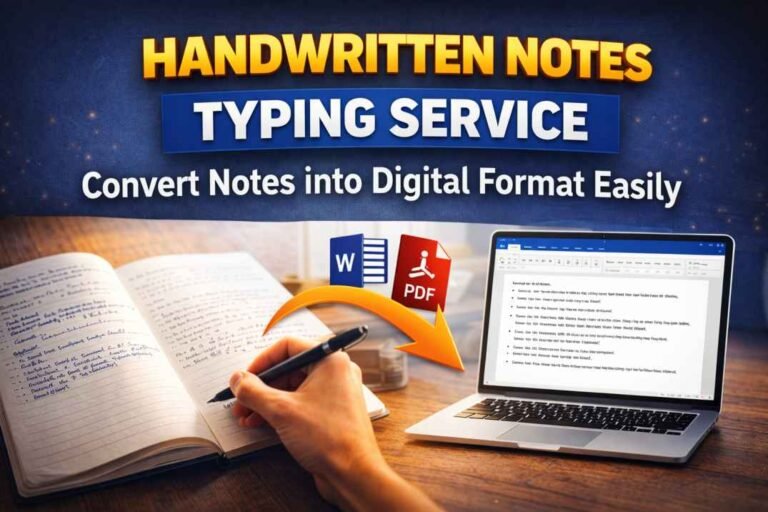
- Handwritten document typing
- Audio and video transcription
- PDF to Word conversion
- Data entry tasks
- Academic and business document preparation
They are designed to save time, reduce manual effort, and ensure accuracy.
Why People Use Online Typing Services
Before understanding how typing services work, it’s important to know why they are in demand.
Time Efficiency
Typing large volumes of content can be time-consuming. Outsourcing this task allows individuals and businesses to focus on more important work.
Accuracy
Professional typists ensure high levels of accuracy, especially for complex or technical content.
Cost-Effective
Hiring a full-time typist is expensive. Online services provide flexible and affordable options.
Convenience
You can submit your work from anywhere and receive completed files online.
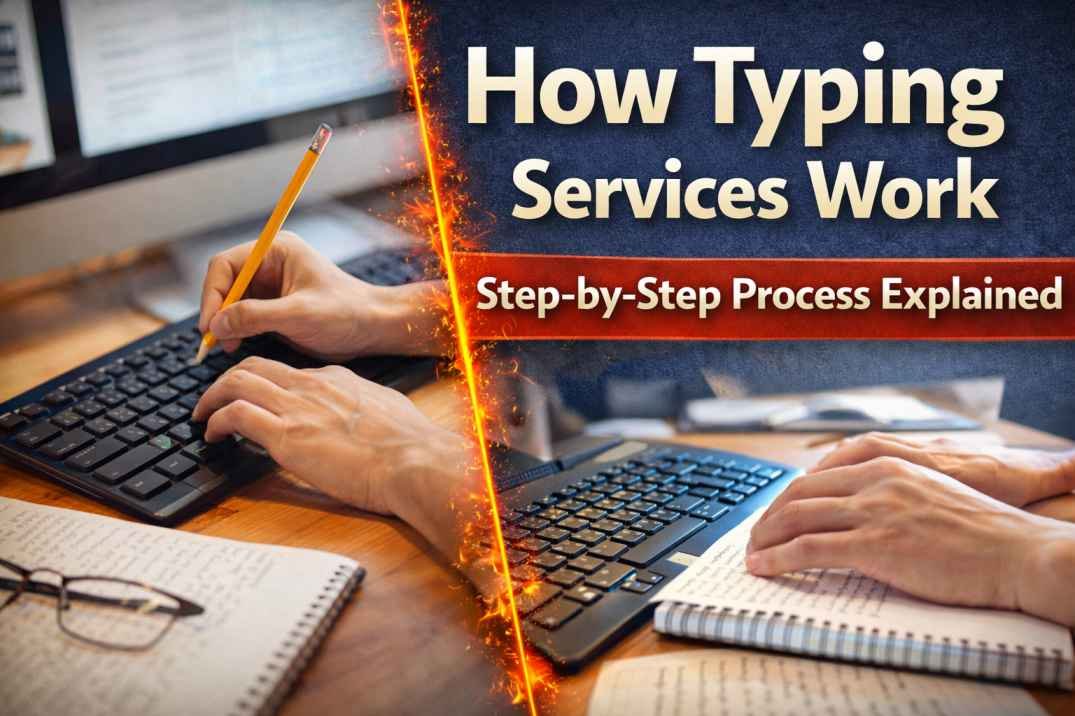
Step-by-Step Process: How Typing Services Work
Let’s break down the complete workflow followed by most online typing service providers.
Step 1: Submission of Requirements
The process begins when the client submits their requirements.
This may include:
- Uploading handwritten notes, scanned documents, or audio files
- Providing instructions for formatting
- Specifying deadlines
- Mentioning language or style preferences
Clear instructions at this stage help ensure accurate results.
Step 2: Project Evaluation
Once the files are received, the service provider evaluates the project.
They analyze:
- Volume of work
- Complexity of content
- Quality of source material
- Required turnaround time
Based on this evaluation, they determine pricing and timelines.
Step 3: Quotation and Confirmation
After evaluation, the provider shares:
- Cost estimate
- Delivery timeline
- Scope of work
The client reviews the details and confirms the order. Some services may require advance payment before starting.
Step 4: Assignment to Professional Typists
Once confirmed, the project is assigned to skilled typists.
These professionals are trained to handle:
- Different document formats
- Technical and academic content
- Language-specific requirements
This step is crucial in ensuring quality and accuracy.
Step 5: Typing and Data Entry
This is the core stage where the actual work happens.
Depending on the project, typists:
- Convert handwritten notes into digital text
- Transcribe audio recordings
- Reformat documents
- Enter data into structured formats
They follow the client’s instructions carefully while maintaining accuracy.
Step 6: Formatting and Structuring
After typing, the content is formatted to meet professional standards.
This includes:
- Proper alignment and spacing
- Headings and subheadings
- Font consistency
- Page numbering
- Tables and bullet points
Good formatting enhances readability and presentation.
Step 7: Quality Check and Proofreading
Quality assurance is a critical part of how typing services work.
The typed document undergoes:
- Proofreading for spelling and grammar
- Cross-checking with original content
- Error correction
- Consistency checks
Many services follow a multi-level review process to ensure accuracy.
Step 8: Final Delivery
Once the document passes quality checks, it is delivered to the client.
Delivery formats may include:
- Word documents
- PDFs
- Excel sheets
- Customized formats
Files are usually shared via email or secure download links.
Step 9: Revisions (If Required)
Most professional services offer revisions if needed.
Clients can request:
- Corrections
- Formatting changes
- Additional edits
This ensures complete satisfaction.
Types of Online Typing Services
Understanding the different types helps you choose the right service.
Handwritten Document Typing
Converts handwritten notes into digital text.
Audio Transcription
Transforms audio recordings into written format.
Data Entry Services
Inputs data into spreadsheets or databases.
PDF Conversion
Converts scanned or PDF files into editable documents.
Academic Typing
Formats assignments, theses, and research papers.
Tools and Technologies Used
Modern typing services use advanced tools to improve efficiency.
Typing Software
Specialized tools for faster and accurate typing.
Speech-to-Text Tools
Assist in transcription tasks.
Grammar and Spell Checkers
Ensure error-free documents.
File Conversion Tools
Help convert documents into different formats.
Factors That Affect Typing Service Quality
Several factors influence the final output.
Clarity of Source Material
Clear handwriting or audio leads to better accuracy.
Complexity of Content
Technical or specialized content requires expertise.
Turnaround Time
Short deadlines may affect pricing and workflow.
Experience of Typists
Skilled professionals deliver better results.
Benefits of Using Professional Typing Services
- Saves time and effort
- Ensures high accuracy
- Provides professional formatting
- Handles bulk work efficiently
- Offers flexibility and convenience
These advantages make online typing services a valuable resource.
Common Mistakes to Avoid
When using typing services, avoid these errors:
- Providing unclear instructions
- Submitting low-quality source files
- Ignoring proofreading requirements
- Choosing services based only on low cost
Clear communication ensures better results.
How to Choose the Right Typing Service
To get the best results, consider:
- Experience and expertise
- Customer reviews
- Pricing transparency
- Turnaround time
- Quality assurance process
A reliable provider ensures smooth and efficient service.
Security and Confidentiality
Data security is a major concern for many clients.
Professional typing services:
- Maintain confidentiality agreements
- Use secure file transfer systems
- Protect sensitive information
Always choose a trusted provider for confidential work.
Future of Online Typing Services
The industry continues to evolve with technology.
Emerging trends include:
- AI-assisted typing and transcription
- Automation tools
- Cloud-based collaboration
- Faster turnaround times
Despite automation, human expertise remains essential for accuracy and quality.
Final Thoughts
Understanding how typing services work helps you make better decisions when outsourcing your typing needs. From submission to final delivery, the process is designed to ensure accuracy, efficiency, and customer satisfaction.
Whether you are a student, business professional, or researcher, online typing services can save time, improve productivity, and deliver high-quality results.
By choosing the right service provider and following best practices, you can make the most of these services and streamline your workflow effectively.